Fresh paint can feel dry quickly, especially in a well-conditioned Florida home. That first dry feel is useful, but it is not the whole story. A wall has several milestones: it needs to dry enough for the next coat, then settle enough for normal use, and finally harden into the durable finish the room needs.
The paint can only move through those stages when the room, wall and product are working together. Temperature, humidity, airflow, how heavily the paint was applied and the condition of the surface all matter. A little patience between steps protects the smooth, even result homeowners want to see once the room is back in use.
The Short Answer: Read the Label, Then Read the Room
For most interior wall paints, the manufacturer’s label is the best starting point for dry and recoat times. It is written for that exact product and tells you the conditions it expects. The label may offer a short recoat window in a room that is comfortably warm, dry and ventilated, but that window can stretch when the room is cool, humid or still.
Think of the listed time as the earliest sensible checkpoint, not a guarantee that the room is ready for every next step. Before recoating, the surface should look even and no longer feel soft or sticky. Before putting furniture against a wall, hanging tape or scrubbing a mark, give the finish the additional time it needs to cure.
Drying, Recoating and Curing: What Changes at Each Stage
Dry to the touch. The surface no longer feels wet or tacky when touched lightly in an inconspicuous spot. It may still be delicate underneath, so this is not the time to lean furniture against it or judge the final durability of the paint.
Ready to recoat. The first coat has had enough time for the next coat to go on without disturbing it. Recoating too early can pull, wrinkle or soften the first coat, particularly where paint was applied more heavily around corners, patches and trim lines.
Cured for everyday use. The coating has had more time to harden and develop its intended durability. This matters most in hallways, kitchens, bathrooms, children’s rooms and other spaces where walls get bumped, cleaned or brushed by furniture. Check the product instructions before washing a wall, applying tape or returning heavy furniture to a tight space.
Use the Product Label as the Schedule
There is no honest one-size-fits-all number for every wall paint. The base material, sheen, room conditions and application method can all change the timing. One commonly used interior product may be touch-dry in about an hour and ready for another coat soon after, while trim enamel, deeper colours, a heavier coat or a cooler room can need substantially longer. The useful plan begins with the instructions on the can or technical sheet for the exact primer and finish paint in the room.
That distinction is backed up by paint manufacturers, not just contractor preference. Benjamin Moore explains that a wall may be dry within one or two hours, usable lightly after a day, and still need about 30 days to fully cure before cleaning. Its product guidance also makes clear that dry time and full hardness are different conditions. Read its guidance on dry time versus cure time alongside the instructions for the product being used.
For a homeowner planning the day, it helps to write down three times before starting: the earliest recoat time, when the room can be used lightly, and when the finish can be cleaned or put under heavy contact. That makes it much easier to coordinate a bedroom, nursery, kitchen or rental turnover without asking a fresh wall to do more than it is ready for.
Why One Room Dries Faster Than Another
Temperature and humidity. A stable, comfortable indoor temperature gives paint the conditions it expects. In a humid room, water in many wall paints can take longer to leave the coating. A cold room can slow the process too. The exact limits are on the label, and they matter more than a rule of thumb from another product.
Air movement. Gentle circulation from a ceiling fan or an HVAC system can help moisture leave the room without creating a dramatic temperature swing. A sealed-up bathroom, laundry room or empty house with no air moving may need more time than an open, conditioned living room.
Coat thickness. Heavier areas dry more slowly. That is common near repaired patches, corners, roller overlaps and cut-in lines. A uniform application is not just about appearance, it helps the room dry at a more even pace.
The wall beneath. Fresh drywall compound, stains, old glossy paint and previous repairs may need their own preparation. If the wall was not clean, dry, smooth and primed where needed, more waiting time alone will not create a reliable finish. Use the wall-preparation checklist before treating a drying issue as a paint-only problem.
A Practical Plan for Painting a Room
1. Prepare before the paint is open. Move and cover furniture, make drywall repairs, clean the wall and gather the tools first. Once the first coat is on, you want the room to have the breathing space and attention it needs, not a rushed interruption because a patch or protection step was missed.
2. Follow the product instructions for each coat. Note the temperature range, humidity guidance, dry time and recoat time for the paint and primer being used. If the room changes, for example a storm brings higher humidity or the air conditioning is turned down, give the coating more time rather than forcing the original schedule.
3. Keep the room gently ventilated. Normal conditioned air and mild circulation are usually more useful than trying to bake the room with portable heat. Keep children, pets and furniture away from freshly painted surfaces while they are still vulnerable to scuffs.
4. Check the finish in good light. After the final coat has had time to settle, look across the walls from the doorway and near windows. That angle makes missed spots, raised repair edges, roller lines and uneven sheen easier to see before the room goes back together.
Bathrooms, Kitchens and Busy Rooms Need More Patience
Rooms with steam, regular cleaning or constant contact deserve a slower return to normal. A bathroom can seem ready until the first hot shower raises the humidity. A kitchen wall can be marked by a chair, bin or appliance before the paint has hardened. In a hallway or stairwell, a bag or handprint can rub the sheen unevenly even though the wall looked dry earlier in the day.
Give these rooms time, then bring them back into use thoughtfully. Keep shower steam down where possible, avoid scrubbing new paint, and leave a small gap between furniture and the wall until the finish has had its full curing period. If a room has water staining, peeling or repeated dampness, solve that condition before a repaint. The drywall repair service can help when a clean paint finish depends on getting the surface right first.
Small Timing Mistakes That Leave a Big Mark
Putting the second coat on because the wall looks dry. A colour can appear even while the first coat is still soft in a corner or over a repaired area. If the roller starts dragging, lifting or leaving a rough edge, stop and give the wall more time. Recoating on a sound, settled first coat is faster than repairing a section that has been disturbed.
Closing the room completely. A freshly painted room does not need a wind tunnel, but it does need sensible air movement. Keeping the home at a stable temperature and allowing normal ventilation helps paint dry more predictably. In Florida, a sudden humid day can make a room feel comfortable while still adding time to the drying schedule.
Returning furniture too soon. The back of a sofa, headboard or storage unit can rub, stick or trap moisture against a finish that is still hardening. Leave a little space around the wall when possible and save the final room reset for after the label’s cure guidance. That one small delay can prevent a stubborn imprint in an otherwise fresh room.
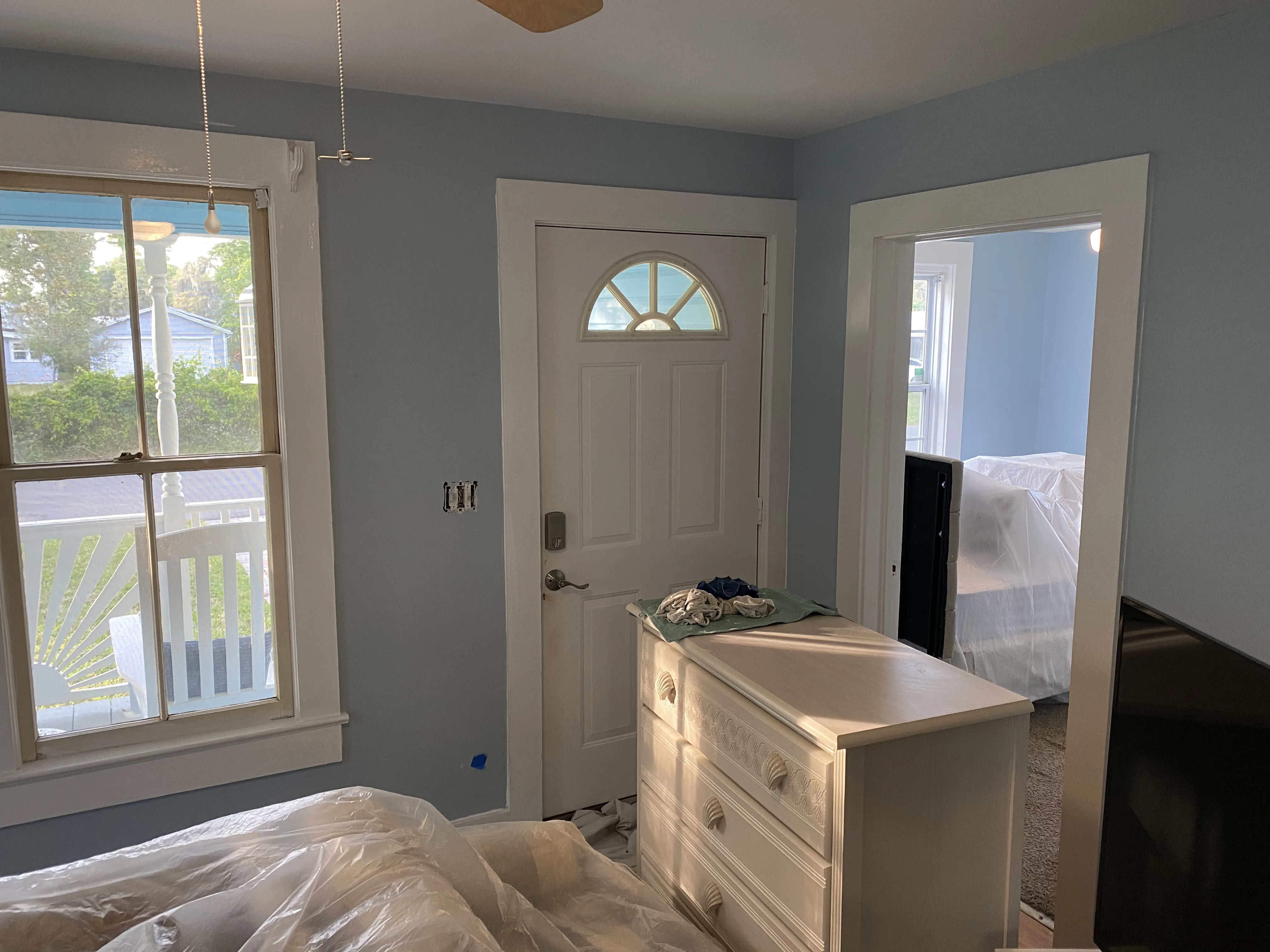
When a Drying Problem Needs a Closer Look
Pause before adding another coat if paint stays tacky, wrinkles, bubbles, pulls up, develops a strong unexpected odour or marks far more easily than the product guidance suggests. Confirm that the paint was used within its stated conditions and that the wall was clean, dry and compatible with the coating. A heavy coat or low airflow may simply need more time, but repeated failure is worth investigating rather than covering.
For a broader interior refresh, Good Fellas can help connect the wall repair, preparation and final painting into one workable plan. Explore interior painting, see the interior finish work, or request a quote when the room needs more than a touch-up.
Frequently Asked Questions
How long should I wait between coats of interior paint?
Use the recoat time on the exact paint label rather than a fixed rule. Many water-based wall paints can take a second coat after a few hours in suitable conditions, but cool temperatures, high humidity, heavy application or low airflow can extend that window.
Is paint dry when it no longer feels tacky?
Not necessarily. A surface can feel dry while the paint beneath is still gaining strength. It may be ready for a careful second coat before it is ready for heavy cleaning, furniture rubbing against it, tape or other hard use.
How long should I wait before moving furniture back against a painted wall?
Follow the paint label, then give the wall extra breathing room when possible. Moving furniture too close too soon can leave scuffs, sticking or rubbed spots on a finish that has not fully hardened.
Can I speed up interior paint drying with fans or air conditioning?
Gentle, steady airflow can help the room dry more evenly. Avoid creating an extreme blast of hot air or closing up a damp room. The goal is a stable indoor environment that follows the coating instructions, not rushing a finish past what it can handle.
Why is my interior paint still tacky after a day?
Tackiness can come from a cool or humid room, a heavy coat, limited airflow, an incompatible surface or a coating that needs more time. If it stays tacky or marks easily, pause before adding another coat and check the product guidance and the surface condition.